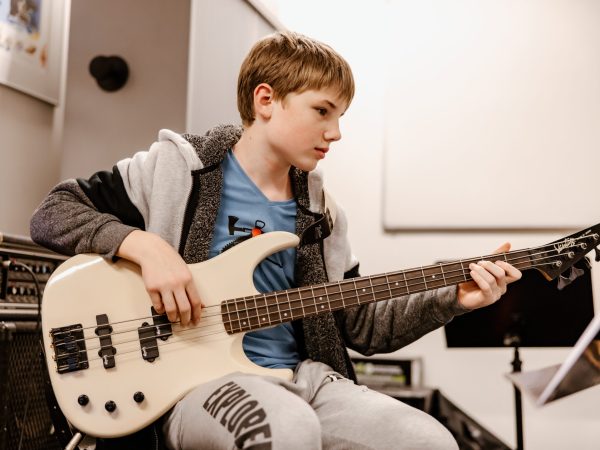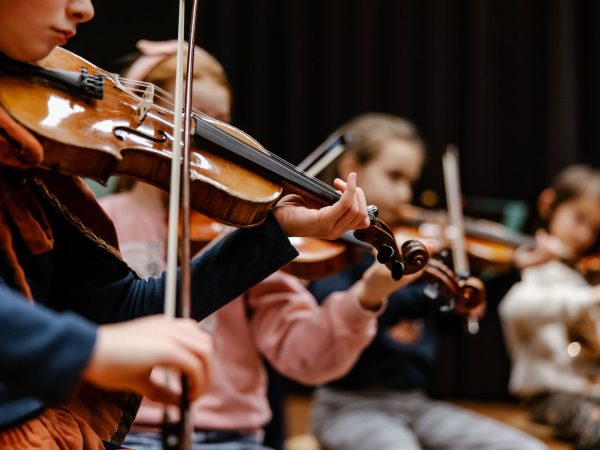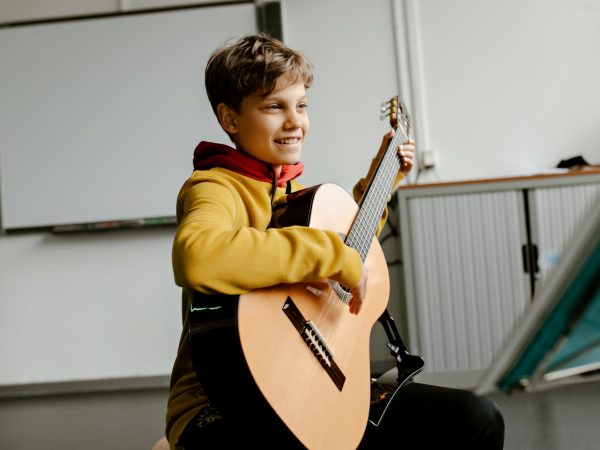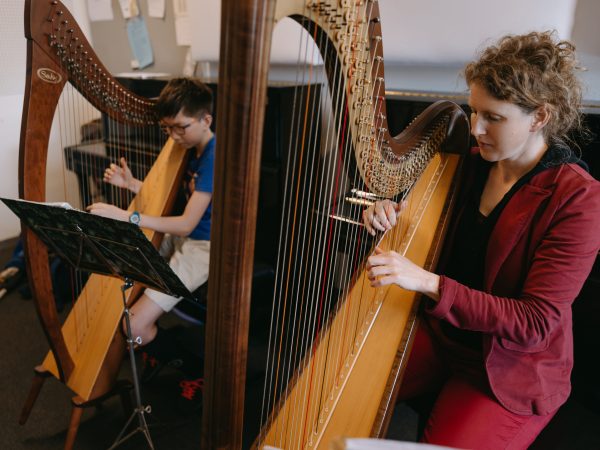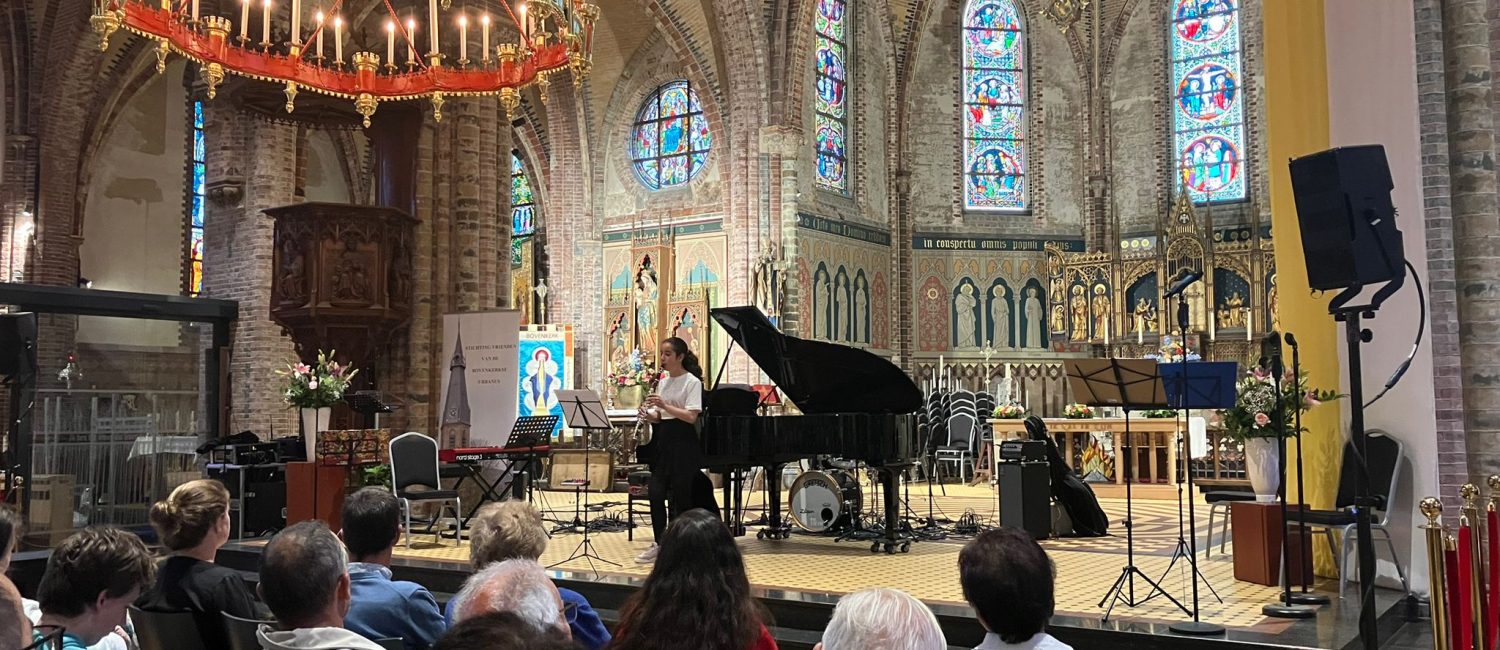
Saturday, June 13 promises to be a special evening at the Urbanuskerk on Noorddammerlaan. Two string orchestras from Platform C, conducted by Lizette Bertelsmann-van Rooij and Jeanny Beerkens, will be performing. Platform C’s Podium Class will also take the stage in various ensembles, performing a diverse and challenging repertoire.
What makes this evening even more special is that a new piece of music will be premiering. Hans Scheepers, violin teacher and composer at Platform C, wrote Game for Seven specifically for this occasion: a composition for the Podium Class. We spoke with Hans about the creation of this piece, his approach to composing, and his longstanding connection to Platform C.
Has been associated with Platform C for nearly thirty years
Hans has been with Platform C as a violin teacher and orchestra conductor since 1996. Although he has now reached retirement age, he is still active within the organization. “I’ve said that I’d like to keep going for a while longer,” he says. “It’s just so much fun to be involved.”
In addition to teaching, Hans has been writing his own compositions and arrangements for his students for many years. He started doing this almost as soon as he began working at the music school.
“There isn’t always suitable material available for children’s and youth orchestras,” he explains. “By composing my own music, I can tailor it precisely to the group I’m working with.”
A game for seven
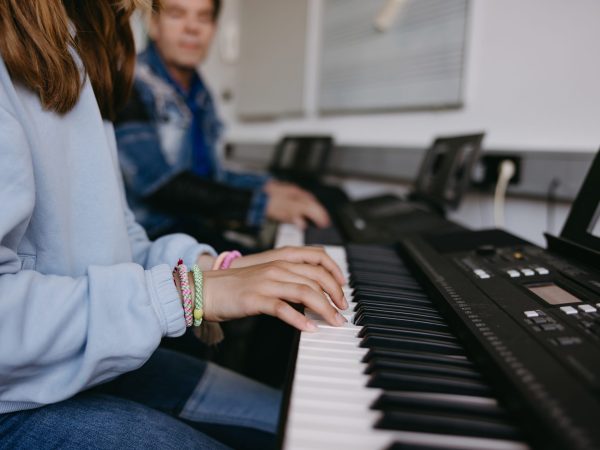
The same applies to *Game for Seven*. The title literally means “game for seven.” The piece was written for the seven instruments in the current Podium Class: two flutes, clarinet, violin, two cellos, and piano.
According to Hans, it was precisely that unusual instrumentation that made it such a fun challenge. “It forces you to really think about the role of each instrument. Everyone has to have their own function within the piece.”
The result is a composition that is tailored entirely to this group of students.
Platform C’s Podium Class is designed for students looking for an extra challenge alongside their regular lessons. They receive additional instruction, play together frequently, and learn to perform in various ensemble configurations. According to Hans, it is precisely this ensemble playing that is incredibly valuable. “It’s not just about playing your own part well. You learn to listen to each other, feel the tempo together, and make music as a group.”
From idea to composition
But how does a piece like that actually come about?
For Hans, it all starts with a motif that makes him think, “I can do something with this.” He builds on that idea. The motif reappears in different sections and gradually develops into a piece of music. Hans works out his ideas partly at the piano and then enters them into music notation software.
“Back in the day, you used to write everything out by hand. Nowadays, I can hear right away on the computer how the different parts sound together. That’s really helpful when I’m composing.”
Still, it’s mostly a matter of trying things out, listening, and making adjustments. Sometimes he listens to a composition several times before a new idea for the next part suddenly comes to him. Step by step, the piece then comes together as a whole.

Hans while composing
Far from finished
And although Hans is now officially retired, he has no intention of sitting idle. He already has plans in place for next season. He’s already thinking about new compositions for the new string orchestra.
On June 13, the premiere of *Game for Seven* will take place at the Urbanuskerk. Anyone curious to hear the result is warmly invited to come and listen during this special evening at the Urbanuskerk. Click here for more information.